The Spring Street Archaeology Project is now located at
SpringStreetArchaeologyProject.com
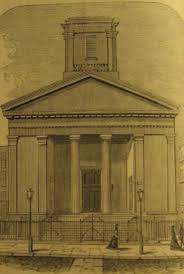
What is the Spring Street Archaeology Project?
The Spring Street Archaeology Project is an ongoing research project headquartered in the Physical Anthropology lab at Syracuse University. This project is a collaboration between Syracuse University faculty and students, and external researchers with the goal of studying the skeletal and artifact remains from the Spring Street Presbyterian Church burial vaults (1820-1849) in order to understand what life was like for those living in New York City during the dynamic 19th century.
The Spring Street Presbyterian Church was built in 1810 on the corner of Spring Street and Varick Street in New York City. As the congregation grew, so did the city around the church. Spring Street Presbyterian Church is most notable for its involvement with the early 19th century abolition movement and its role in the Riots of 1834. The church was closed in 1963, and a parking lot was built on the site in 1966.
In December 2006 construction crews working on the former site of the church uncovered human skeletal remains. Archaeology crews with AKRF and URS excavated the burial vaults of the Spring Street Presbyterian Church during the winter of 2006-2007. After the initial excavations and analysis, the collection of human skeletal remains and artifacts was sent to Syracuse University in Syracuse, NY, for further study. In summer 2014 the skeletal remains of the individuals recovered from the site were reburied at Green-Wood Cemetery in Brooklyn.